

A Dummies Guide to Dueling
(and the Dummies Who Fought Them)
To state the obvious, duels add fantastic drama to a romance novel. Pistols at dawn? I’m there watching from behind a tree.
Duels are especially tasty when the hero is on the outs. Perhaps his betrayal was too unforgivable, and groveling simply isn’t enough… until he puts his life on the line to prove his love. What better way to demonstrate that you are a well-adjusted life partner than meeting someone in a field and shooting at each other at point-blank range rather than giving — or receiving — an apology?
Sorry. Too cynical.
To be clear, I absolutely love a duel in romance. However, researching real life examples has only emphasized how mind-bogglingly stupid they actually were. Reviewing my notes, one academic’s takeaway was that swords are emotional whereas pistols are stoic.1 I mean… I kind of get that one. Or another who said that duels were inherently rational because they helped uphold credit markets.2
It’s a take.
Like so many things, what is beautiful in a romance novel is absolutely terrible in real life. But that’s okay. That’s why we visit fictional worlds. After I walk you through the history of dueling, I’ll return you to a happier place with some romance examples actually worth your time… unlike the historical duels I spent my week reading about.
Defining a Duel
What is a duel? When historical romances refer to a duel, they usually mean a “duel of hono(u)r.” This was a social institution that originated in Italy, spread to France, and reached the United Kingdom in the 1570s.3
Of course, single combat is a universal phenomenon. A duel of honor, however, is distinct for several reasons. The most important is formality. Duels followed a rigid set of steps and codes that had to be observed in order to reach what participants called “satisfaction.” Importantly, they did not necessarily need to end in death.4
The most famous rulebook of dueling in the English-speaking world is the Irish Code Duello, drafted in 1777 in Clonmel, County Tipperary. It laid out 26 articles covering everything from how to issue a challenge to when a gentleman could consider his honor satisfied.5
The Code Duello (Condensed)
1. Offense Occurs
☐ An insult, accusation, or affront to honor is made.
2. Demand for Satisfaction
☐ The offended party requests an apology or explanation.
3. Challenge Issued
☐ If satisfaction is refused or inadequate, a formal challenge is delivered.
4. Seconds Appointed
☐ Each duelist appoints a second to represent him.
Note: this is very important as the second is in the position to defuse or exacerbate conflict
5. Attempt Reconciliation
☐ Seconds attempt to resolve the dispute and avoid bloodshed.
6. Terms Negotiated
☐ Seconds determine:
weapon (pistols or swords)
location and time
distance or conditions
7. Duelists Appear (duh)
☐ Both parties arrive at the agreed location with their seconds.
8. Final Opportunity for Apology
☐ Seconds offer a last chance for reconciliation.
9. The Duel Takes Place
☐ Combat proceeds according to the agreed terms.
10. Honor Is Satisfied
☐ Duel ends when:
first blood is drawn
shots are exchanged
one party is wounded or yields
or satisfaction is otherwise acknowledged.
The Dummies Who Dueled
So we have the how, but the who and why remains. Let’s start with the who.
Generally speaking, one had to belong to a certain social class to participate in the honor culture that supported dueling. Most duelists were members of the aristocracy or gentry, along with military officers and other men who claimed the status of a gentleman.
That said, it was often the gentlemen of London causing the most chaos. Cities had the highest concentration of gentlemen—and therefore more gentlemen to insult. (That’s why I live in one.) Urban society was far denser than country life, which meant gossip circulated quickly through clubs, salons, and social networks. A gentleman might duel if he believed his public honor had been seriously damaged. In the countryside, by contrast, social hierarchies were more stable, and disputes were more likely to be managed privately.
The military also contributed significantly to the number of duels, as bravery and honor were directly tied to professional reputation. After all, no one wants to march into battle behind a man rumored to be a coward. That said, officers shooting each other over drunken insults doesn’t seem like a winning strategy, but I’m no military expert.6
Fine Fictional Fighters
Obviously Romance & Co. does not support real life dueling, however, here are a few scenarios where I guess I will accept it.
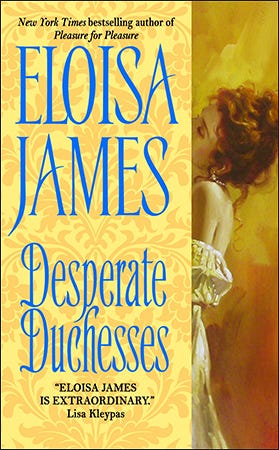
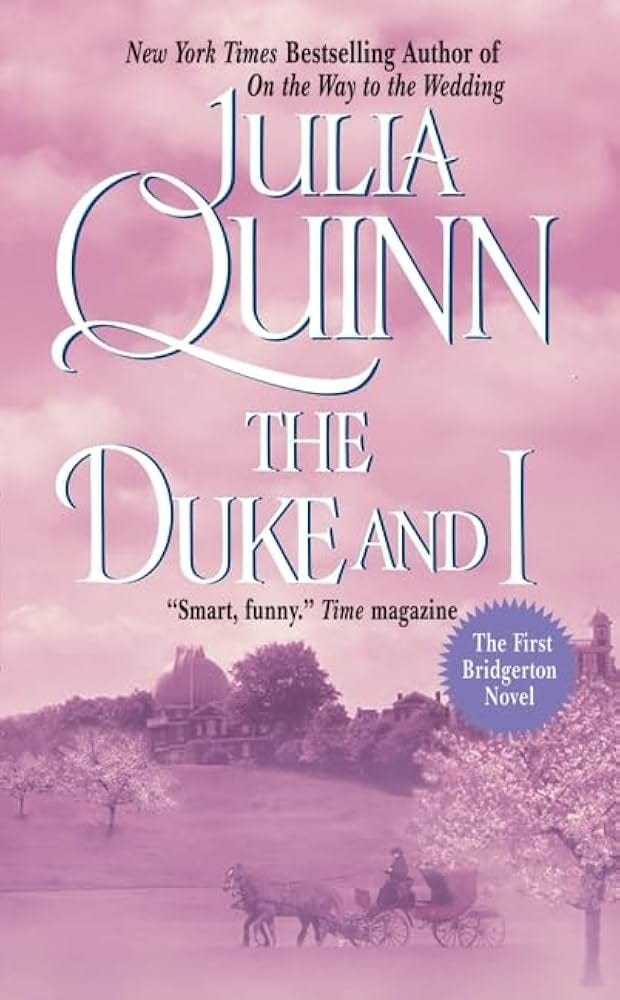
He made a stupid bet and now has to prove he’s serious about you… with pistols. At dawn.
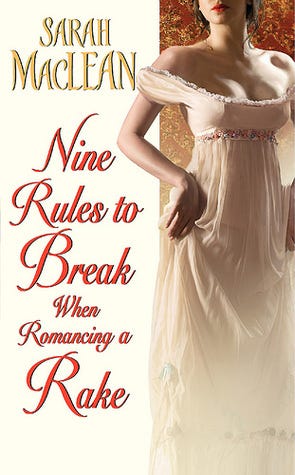
He’s defending your honor, (but you’re fairly certain he’s terrible at dueling.)
Shoemaker, Robert B. “The Taming of the Duel: Masculinity, Honour and Ritual Violence in London, 1660-1800.” The Historical Journal, vol. 45, no. 3, 2002, pp. 525–45. JSTOR, http://www.jstor.org/stable/3133495. Accessed 10 Mar. 2026.
Kingston, Christopher G., and Robert E. Wright. “The Deadliest of Games: The Institution of Dueling.” Southern Economic Journal, vol. 76, no. 4, 2010, pp. 1094–106. JSTOR, http://www.jstor.org/stable/27866745. Accessed 10 Mar. 2026.
Baldick, Robert. The Duel: A History of Duelling. C. N. Potter, 1965, p. 56
Baldick, Robert. The Duel: A History of Duelling. C. N. Potter, 1965, p. 56
Banks, Stephen. “Killing with Courtesy: The English Duelist, 1785-1845.” Journal of British Studies, vol. 47, no. 3, 2008, pp. 528–58. JSTOR, http://www.jstor.org/stable/25482828. Accessed 10 Mar. 2026.
Shoemaker, Robert B. “The Taming of the Duel: Masculinity, Honour and Ritual Violence in London, 1660-1800.” The Historical Journal, vol. 45, no. 3, 2002, pp. 525–45. JSTOR, http://www.jstor.org/stable/3133495. Accessed 10 Mar. 2026.
Personally, I’ve always thought duels to be ridiculous, both in fiction and in real life: so much drama (and occasional death), just so a couple of dudes can prove who has the bigger p… istol. I loved your research on this, though!